June 27 in Bulgaria
Monumental — and gloriously obscure — moments worth knowing, on the day they happened.
Nothing logged for June 27 yet. Try another day — or check back as we keep filling the calendar.
Through the ages
Milestones too old — or too sweeping — to pin to a single day.

The World's Oldest Gold Is Bulgarian
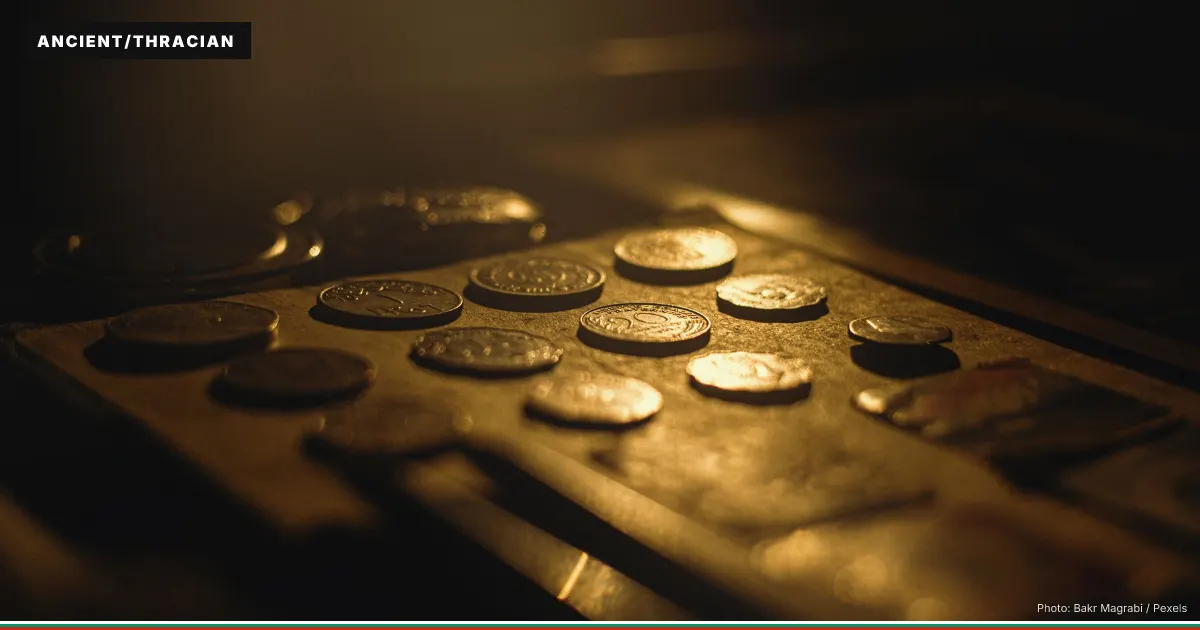
The Varna Necropolis on Bulgaria's Black Sea coast holds the oldest processed gold ever found, crafted around 4600-4200 BC. Its roughly 3,000 gold artifacts outweigh all the gold from every other site of that millennium combined.

Caryatids Guard a Thracian King
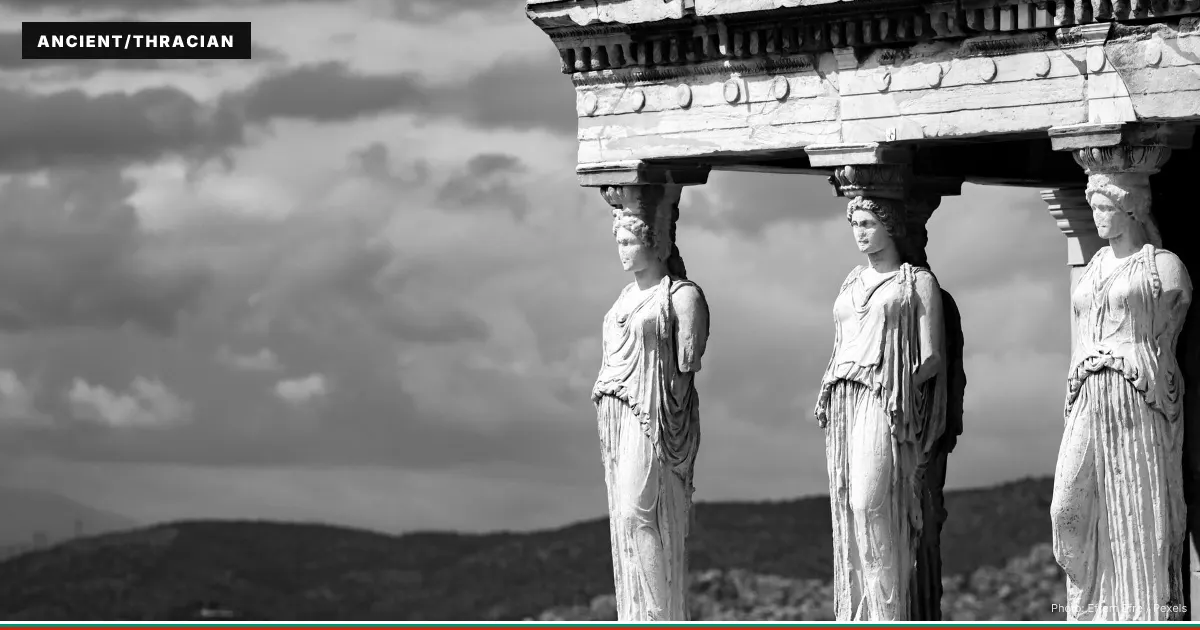
The 3rd-century BC Thracian Tomb of Sveshtari is the only known tomb decorated with ten half-human, half-plant caryatids carved in high relief, believed to hold the Getic king Dromichaetes.

The Kazanlak Frescoes
Built around the end of the 4th century BC, the Thracian Tomb of Kazanlak holds some of the world's finest surviving Hellenistic murals - vivid scenes of Thracian funeral feasts and chariots. UNESCO-listed since 1979.

Spartacus, the Thracian Who Defied Rome
Born in Thrace near the Strymon river in what is now Bulgaria, Spartacus led the greatest slave uprising in Roman history. Starting with about 70 gladiators in 73 BC, he built an army that humbled Roman legions for two years.

★ Bulgaria Is Born
After Khan Asparuh crushed Emperor Constantine IV at the Battle of Ongal (680), Byzantium signed a humiliating peace in 681 recognizing Bulgaria as independent - even paying tribute. The first state Byzantium was forced to acknowledge as a peer.

Khan Tervel Routs an Emperor He Once Crowned
Three years after Tervel helped Justinian II reclaim the Byzantine throne, the ungrateful emperor invaded Bulgaria. At Anchialus (modern Pomorie) in 708, Tervel's cavalry ambushed and shattered the Byzantine army.

The Madara Rider
Carved into a sheer 100-meter cliff near Shumen, the Madara Rider depicts a triumphant horseman spearing a lion. Created in the early 8th century during Tervel's reign, it is the only rock relief of its kind in Europe and a UNESCO site.

Bulgaria Embraces Christianity
Around 864, Knyaz Boris I was baptized at Pliska as Michael, abolishing paganism and steering Bulgaria into the Christian world. When 52 boyar families revolted in 865, Boris crushed the uprising and held his course.

★ Bulgaria Saves the Slavic Alphabet
After Sts. Cyril and Methodius created the Glagolitic script in 863, their persecuted disciples were welcomed by Boris I around 886. In Bulgaria they founded the Preslav and Ohrid literary schools, where Cyrillic - now used by hundreds of millions - was developed.

The Council of Preslav Makes a Language a Nation's Own
At the Council of Preslav in 893, Bulgaria moved its capital to Preslav, expelled Byzantine clergy, and declared Old Bulgarian the official language of church and state, replacing Greek. The same council confirmed Simeon I as ruler.

Simeon's First Triumph at Boulgarophygon
In the summer of 896, young Tsar Simeon I annihilated the Byzantine army at Boulgarophygon, ending the trade war of 894-896 and winning back Bulgaria's market in Constantinople - the first of many crushing victories.

The Ambush at Tryavna Pass
Outnumbered, Ivan Asen I planted a fake deserter who panicked Emperor Isaac II Angelos into retreating through the Tryavna gorge, where Bulgarian fighters fell on the Byzantines from the heights and seized the imperial treasury.

The Boyana Master Paints the Future
The frescoes added to Boyana Church in 1259 rendered over 240 figures with a psychological realism centuries ahead of their time - work many scholars call a precursor of the Italian Renaissance. Now a UNESCO World Heritage Site.

The Swineherd Who Became Tsar
A commoner named Ivaylo rallied desperate peasants, personally drove the marauding Mongols out of Bulgaria, slew the reigning tsar in battle, and forced the nobility to crown him emperor - beating the Mongols, the Byzantines, and the boyars all at once.

Evtimiy Founds the Tarnovo Literary School
Patriarch Evtimiy established the Tarnovo Literary School and led an orthographic reform that purified Bulgarian Church Slavonic - its corrected texts became the model for Serbia, Romania, and Russia. The last medieval golden age of Bulgarian letters.

★ Paisius Lights the Spark
From Mount Athos, the monk Paisius of Hilendar finished Istoriya Slavyanobolgarska, the first modern history of Bulgaria, urging his countrymen not to be ashamed to call themselves Bulgarians. It is regarded as the harbinger of the entire National Revival.

The First Printed Book in Modern Bulgarian
Bishop Sofroniy Vrachanski published the Nedelnik (Kiriakodromion), the first book ever printed in a modern Bulgarian close to everyday speech - putting the people's language into print for the first time.

The Fish Primer
Dr. Petar Beron published the Riben Bukvar, the first primer in modern Bulgarian - a pocket encyclopedia teaching reading, arithmetic, and natural science. It got its nickname from the whale and dolphin printed on its last page.

Rakovski's First Bulgarian Legion
In Belgrade, revolutionary mastermind Georgi Rakovski formed the First Bulgarian Legion, training armed volunteers - including a young Vasil Levski - for the liberation struggle. Its fighters got their baptism of fire defending the city before being expelled in September 1862.

The ELKA 6521: One of the World's First Electronic Calculators
In 1965 Bulgarian engineers unveiled the ELKA 6521, one of the world's earliest electronic desktop calculators - hailed internationally as among the best of its era and a cornerstone of Bulgaria's booming electronics industry.

Maria Gigova: First Three-Time Rhythmic World Champion
Bulgaria's Maria Gigova became the first gymnast ever to win three rhythmic gymnastics World All-Around titles (1969, 1971, 1973) and holds an unmatched four world golds in hoop - the matriarch of the legendary 'Golden Girls.'

The Pravetz 82: Bulgaria, Silicon Valley of the Eastern Bloc
Serial production of the Pravetz 82 - Bulgaria's homegrown Apple II clone with built-in Cyrillic support - began in 1982. By the mid-1980s Bulgaria was producing about 40% of all personal computers used across the COMECON socialist bloc.
Bulgaria's holidays & what they mean
New Year's Day
Marks the start of the new calendar year. Celebrated with fireworks, family feasts, and the survakane custom in which children gently tap relatives with a decorated dogwood stick (survachka) to wish health and prosperity.
Baba Marta Day (Martenitsa)
A beloved folk tradition welcoming spring. Bulgarians exchange martenitsi - red-and-white woven adornments worn until one sees a stork or blossoming tree, then tied to a branch. A major cultural observance but a normal working day.
Liberation Day (National Day)
Bulgaria's national holiday, commemorating the 1878 Treaty of San Stefano that ended nearly five centuries of Ottoman rule. Marked by official ceremonies, wreath-laying, and gatherings at the Shipka Pass monument.
International Women's Day
Widely observed day on which women, mothers, and female colleagues receive flowers and gifts. Culturally significant and broadly celebrated, but a regular working day.
Labour Day
International Workers' Day, marking labour and international workers' solidarity. A non-working public holiday often used as a spring break with family outings.
St. George's Day - Day of Bravery and the Bulgarian Army
Honours St. George the Victorious and serves as Bulgaria's Armed Forces Day, celebrated since 1880. Marked by a major military parade in Sofia, religious services, and traditional roast-lamb feasts. A non-working public holiday.
Day of Bulgarian Education and Culture and Slavonic Literature
Celebrates Saints Cyril and Methodius and the Cyrillic alphabet, alongside Bulgarian education and culture. One of the most cherished holidays, marked by processions, school festivities, flowers, and the holiday's anthem.
Unification Day
Commemorates the 1885 unification of the Principality of Bulgaria with Eastern Rumelia, a milestone in modern statehood. Observed with official ceremonies, especially in Plovdiv where unification was proclaimed.
Independence Day
Marks Bulgaria's 1908 declaration of full independence from the Ottoman Empire, elevating the country to a kingdom. Celebrated especially in the old capital Veliko Tarnovo where independence was proclaimed.
Day of the National Awakeners
Honours the revivalists, writers, and educators who preserved Bulgarian language and identity during Ottoman rule. It is a non-working day only for schools and universities; the general public works as normal.
Christmas Eve
The evening before Christmas, centred on a meatless ritual dinner with an odd number of vegetarian dishes and round bread hiding a fortune coin. A non-working public holiday.
Christmas Day
Celebrates the Nativity of Christ with family gatherings, festive meals, and gift-giving. The first of the two non-working Christmas days.
Second Day of Christmas
The second non-working Christmas day, continuing family celebrations and feasting.
Good Friday (Orthodox)
The Friday of Orthodox Holy Week commemorating the crucifixion, a day of strict fasting marked by the procession of the Epitaphios (burial shroud). The first of four consecutive non-working Easter days. Bulgaria follows the Orthodox Paschal computation, so the date differs from Western Easter.
Holy Saturday (Orthodox)
The Saturday of Holy Week, a quiet day of anticipation before the Paschal midnight liturgy. A non-working day as part of the Easter holiday period.
Easter Sunday (Orthodox)
Orthodox Pascha, the most important feast of the Bulgarian Orthodox calendar, celebrating the resurrection of Christ. Observed with midnight liturgies, candle-lighting, and the cracking of dyed red eggs.
Easter Monday (Orthodox)
The Monday after Orthodox Easter, completing the four-day Easter holiday block - a non-working day spent with family continuing the Paschal celebrations.