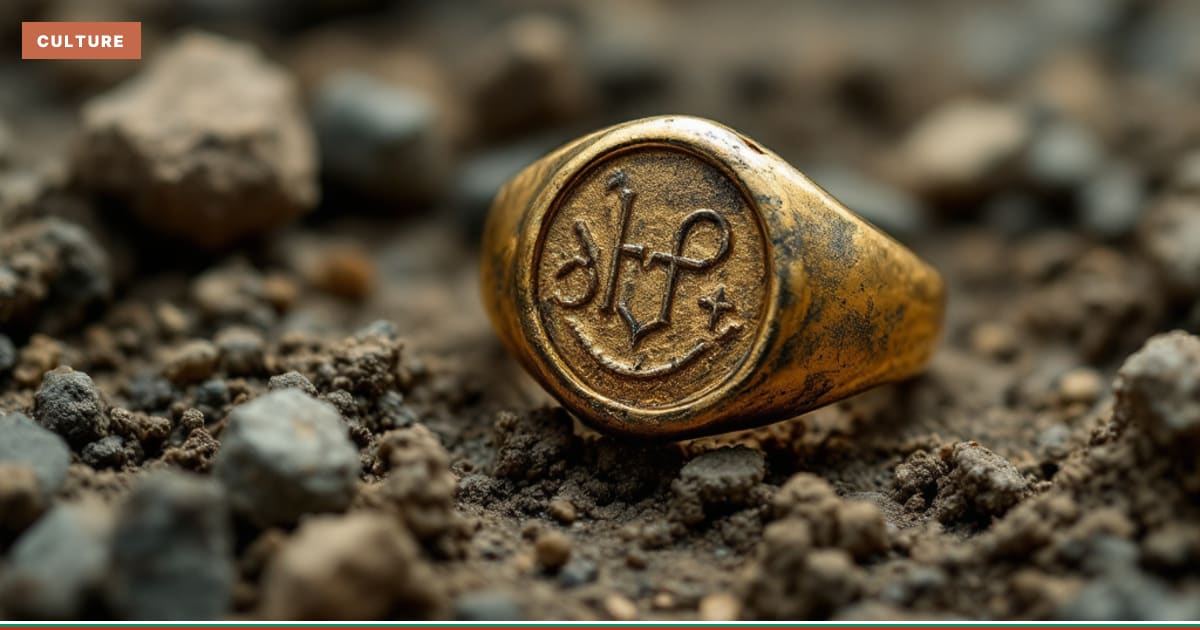
A 14th-century gold signet ring belonging to a Byzantine aristocrat has been found near the southern Bulgarian town of Zlatograd. The ring, along with gold coins from the same period, was donated to the Archaeological and Ethnographic Museum in Zlatograd, where it is now on display.
The woman behind the ring
According to Dariknews, archaeologist Professor Nikolay Ovcharov identified the piece as a signet ring used to stamp official documents. It belonged to a woman named Maria Skulena, who held the title of "sevasta," the feminine form of "sevastos," a Byzantine honorific meaning "venerable" or "distinguished." In 14th-century Byzantium the title was granted to mid-level officials at the local and regional level. Signet rings in Byzantine practice functioned as a personal seal: the ring's impression on a document gave it legal authority and identified the sender.
Ovcharov notes that a document from the Great Lavra monastery on Mount Athos mentions a "Sevastos Skules" in 1338, believed to be Maria's husband, a wealthy landowner from the region of Aegean Macedonia. The ring was almost certainly made in a provincial Byzantine workshop during the reign of the Palaiologos dynasty, Ovcharov says, and the style of the inscription alone confirms that dating.
Found along an ancient road to Greece
Standart reports that the ring was discovered along a road leading from Zlatograd toward the Greek border, within a four-to-five-kilometre corridor approaching the frontier. Engineer Alexander Mitushev, founder and manager of the museum, said the piece came to the collection as a private donation and was recovered along that historic route.